
New hybrid design methodology and framework of practical tools for decision-aiding and assessment of NBS’ efficacy
Choosing Nature Based Solutions (NBS) among other protection strategies or assessing their efficacy (effectiveness) levels are two examples of key decisions that stakeholders have to take to manage risk.
A new hybrid design methodology and operational tools to use them are proposed to help decision-making. A structured approach of the decision-making process is proposed (figure 1). The first steps to help decision-making is to describe the decision context which is addressed (step 1 to 3, figure 1).
Using an example among the numerous existing multi-criteria decision-making, (step 4), we have designed a multi-criteria decision-making framework, easy to design and implement, to assess main NBS’ features, following the TOPHEE (Technical, Physical, Economic, Environmental, Human/Social, Organisational) approach (see also factsheet in this e-guide about Designing and using indicators to assess the efficacy (effectiveness) of Nature Based Solutions).

Figure 1. A decision-aiding model is always linked to a specific decision context: a whole methodology is proposed from problem identification to decision-aiding (including and using several methods). A simple 5WH2 approach is used to descride decision contexts as a starting point of decision-aiding process.
A decision model is proposed to assess NBS solutions and strategies according four main NBS’ features corresponding to technical/physical (1), economic (2), social/human/cultural (3) and environmental (4) aspects (figure 2).
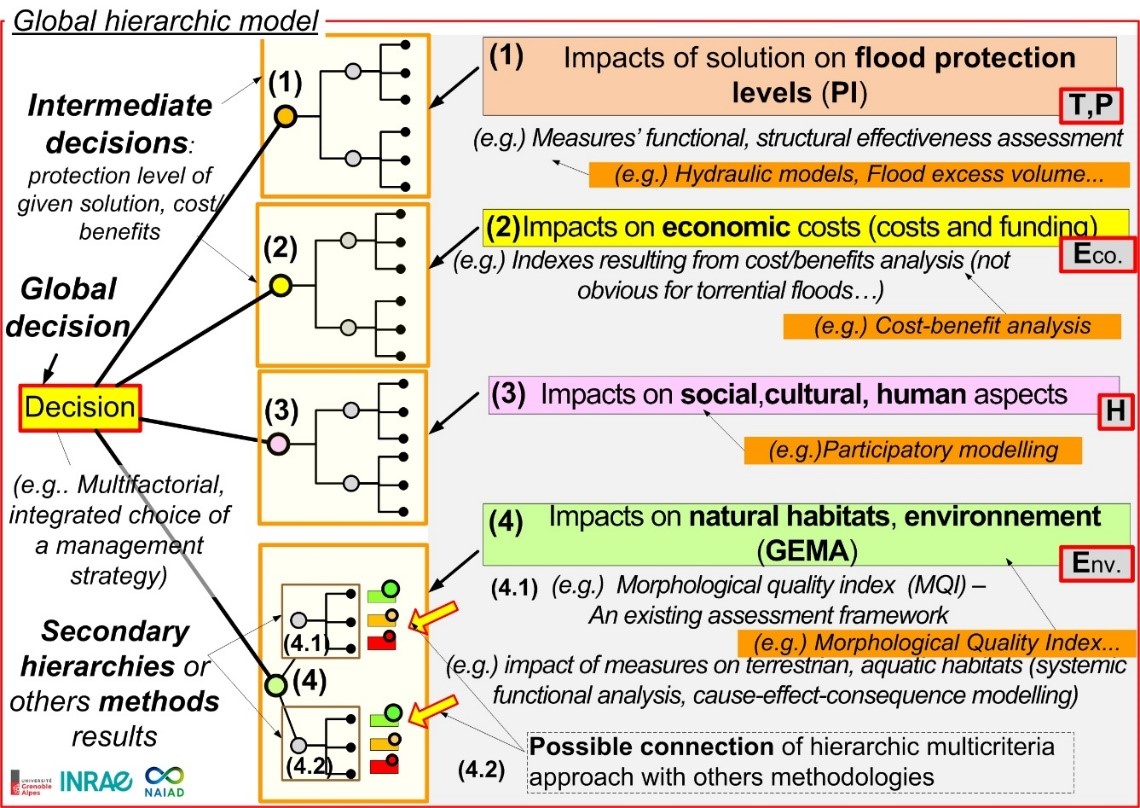
Figure 2. A new hybrid design approach is proposed : a (multicriteria) decision-aiding framework is coupled with thematic, disciplinary, expert approaches to analyse Technical, Physical (T,P), Economic (Eco), Social/Cultural,Human (H) and Environmental (Env) NBS‘ features and effectiveness (+ option Organisational (O) – not represented). (adapted from Tacnet et al., 2018) DOI : 10.14758/SET-REVUE.2018.26.09.
For each of these items, the indicators are assessed according to thematic, disciplinary approaches such as hydraulic modelling for protection against floods. This combination constitutes the so-called hybrid design methodology bridging the gap between decision-making and more classical expert, engineering approaches (figure 3).
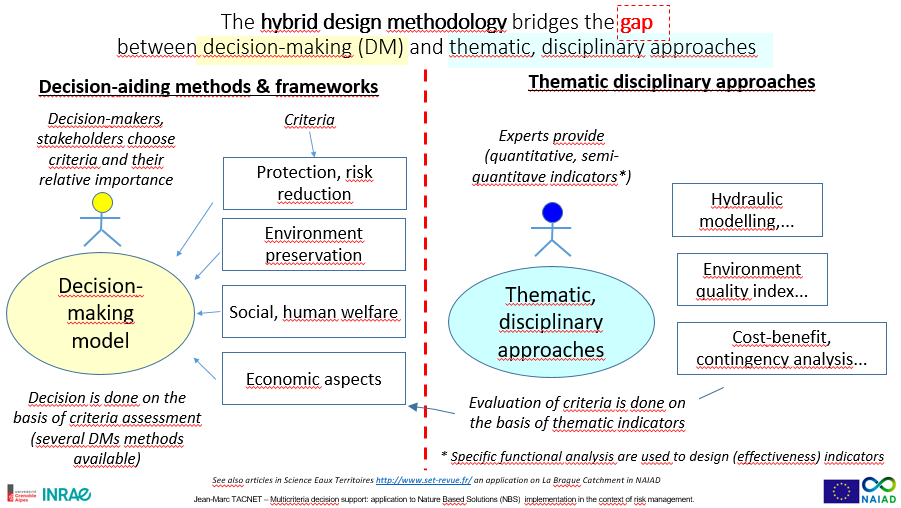
Figure 3. The new hybrid design methodology combines decision-aiding methods and thematic approaches (hydraulic engineering, economic analysis, bioengineering…) to assess NBS‘ effectiveness and/or choose the best strategies.
To be implemented and used in practice, operational tools are proposed to demonstrate, explain the principle of the multicriteria decision model. Users can assess interactively the score of protection strategies (e.g. Grey –Scenario 1 , Hybrid (Grey and Green solutions) – Scenario 2 and Green –Scenario 3). Based on relative preferences between the four main criteria and preferences between solutions for each of them, it is therefore possible to calculate the overall aggregated score of each solution. This (excel microsoft) spreadsheet exists in French and English and is available for free.

Figure 3. An easy to use calcultation tool (excel spreadsheet) is delivered (in French and English) to illustrate the implementation of the multicriteria decision-aiding approach and as a support for transfert to stakeholders and practitionners.
Once the principle of building a multicriteria decision model is understood, it is possible to design any model and evaluate it easily. One key step the process is to calculate preferences. A series of spreadsheets is proposed to calculate weights given relative preferences matrix.
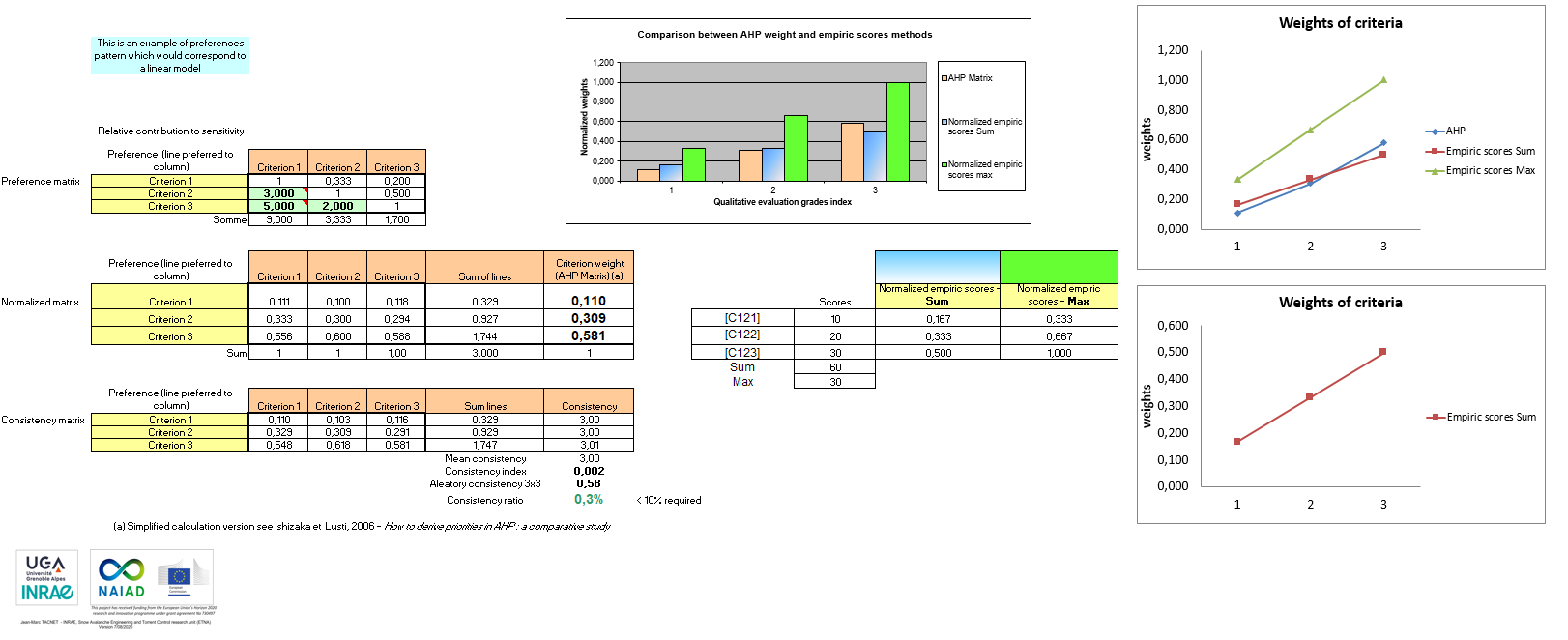
Figure 4. A more advanced versatile spreadsheet is proposed to calculate weights given preferences matrix (AHP framework). It allows to easily build, adapt any multicriteria decision-aiding model.
Applications to decision making in the insurance sector:
The approach and the tools offer a traceable, explicit description of decision processes and helps decision-makers to discuss and make choices according to their own priorities (instead of applying and being somewhere obliged to follow technical conclusions and outputs).
Added value of this modelling approach/model/results:
The approach merges thematic, engineering and decision-aiding approaches. It bridges different worlds and communities. Decision-makers can use information provided by experts and introduce their own vision, preferences about the benefits of each solution to take their proper decision. A practical and educational framework allows them to see interactively the influence of their choice.
What decision can be improved with this modelling approach:
Any decisions about choosing the best protection or solutions including NBS and assessment of NBS’ effectiveness can be addressed. It offers a new perspective in comparison with existing methods (risk analysis, monetary cost-benefit analysis).

Potential Categories of Users
Any stakeholders involved in the assessment of NBS effectiveness and contributing or involved in decision-making process including :
Regional and local authorities
River basin authorities
Land use planners
Public bodies and agencies
State, administrations
Experts
Citizens
Non-governmental organizations
Insurance companies
Additional Links
TACNET, Jean-Marc ; PITON, Guillaume ; PHILIPPE, Félix ; GOUHRAND, Antoine ; VASSAS, Carolyne, Décider dans le contexte de la GEMAPI : exemple de méthodologie d’une approche intégrée d’aide à la décision et application aux projets d’aménagements, Revue Science Eaux & Territoires, GEMAPI : vers une gestion plus intégrée de l’eau et des territoires, numéro 26, 2018, p. 48-53, 09/11/2018. http://www.set-revue.fr/decider-dans-le-contexte-de-la-gemapi-exemple-de-methodologie-dune-approche-integree-daide-la DOI : 10.14758/SET-REVUE.2018.26.09
TACNET, Jean-Marc, PITON, Guillaume, FAVIER, Philomène, PENGAL, Polona (2019): “DELIVERABLE 5.4 Integrative modelling framework and testing in the DEMOs. Part 4: From indicators definition to NBS choice and effectiveness assessment”. EU Horizon 2020 NAIAD Project, Grant Agreement N°730497 (to be published as part of a book)