
Designing and using indicators to assess the efficacy (effectiveness) of Nature Based Solutions (NBS)
Nature-Based Solutions (NBS) are part of risk mitigation strategies and decision-makers (municipalities, basin agencies, state, risk managers…) are searching to assess their effectiveness and compare them with others more classical solutions in order to choose the best strategies and check that they contribute to risk reduction. Several typologies of NBS and related performance indicators exist (e.g. EKLIPSE framework) but indicators may sometimes appear as difficult to be chosen or used. One output of NAIAD consists in a generic approach to define, use and assess effectiveness indicators. The idea is to allow stakeholders to be able to have a critical view on existing indicators and better choose those which corresponds to their needs.
As a starting point, NAIAD project emphasizes that the concept of effectiveness (or efficacy) is not something obvious and it can be very relative. To assess effectiveness in practice, NAIAD develops and uses functional and systemic approach. This approach is derived from safety and reliability engineering, classically used for technological systems. It also allows to describe some possible, often neglected, drawbacks or specific vulnerabilities of NBS such a woody debris caused by erosion of riparian forest or wildfires destroying protection forests.
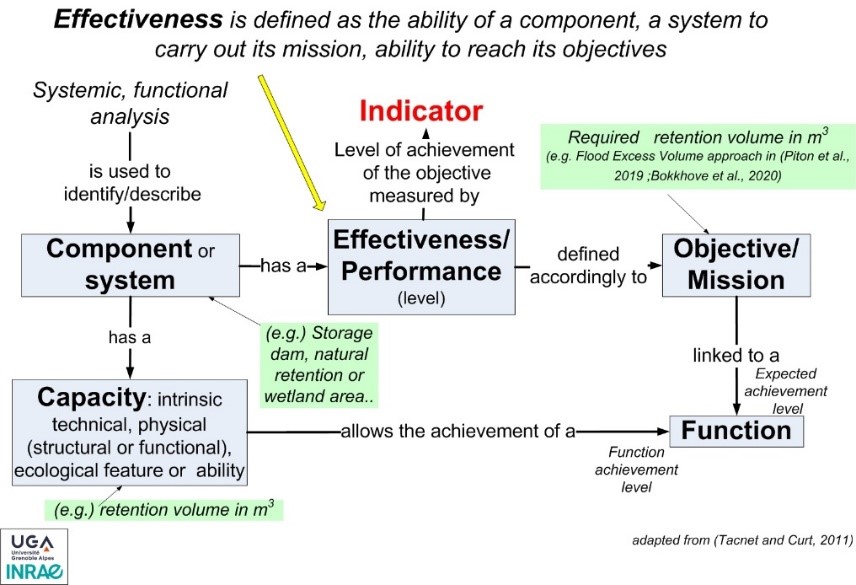
Figure 1. Definition of the concept of indicator linking a capacity, an objective linked to a component or system and ist function (submitted in EU NBS Handbook, chapter 2)
Within NAIAD context, the approach considers NBS as a system (composed of several components) which aims to achieve a function with a given objective. To reach this objective, NBS have capacities. The level of achievement of the function compared with the objective defines the effectiveness. For example, a natural retention area will have a capacity measured by its volume. The objective associated to the storage function can be determined by simple physical models (see Flood Excess Volume method, FEV). The comparison between achieved, observed and expected levels defines the effectiveness (Figure 1). This may look trivial but it is indeed a powerful way to structure the approach in a pragmatic way and to select or even invent the most relevant indicators.
Four main categories of indicators are proposed and gathered under a so-called TOPHEE approach which offers a way to structure the analysis of effectiveness. It includes 1) Technical or Physical effectiveness (will the NBS resist to flooding, will it reduce water depth? Etc…), 2) Economic effectiveness (Are the costs lower than the monetary benefits, what are the avoided damage costs?),3) Environmental effectiveness (How does it preserve, improve quality of environment, habitats, geomorphologic equilibriums) and finally 4) social, Human, cultural effectiveness (how does it improve quality of life, landscape etc.). Another organisational aspect is proposed but not developed in NAIAD.
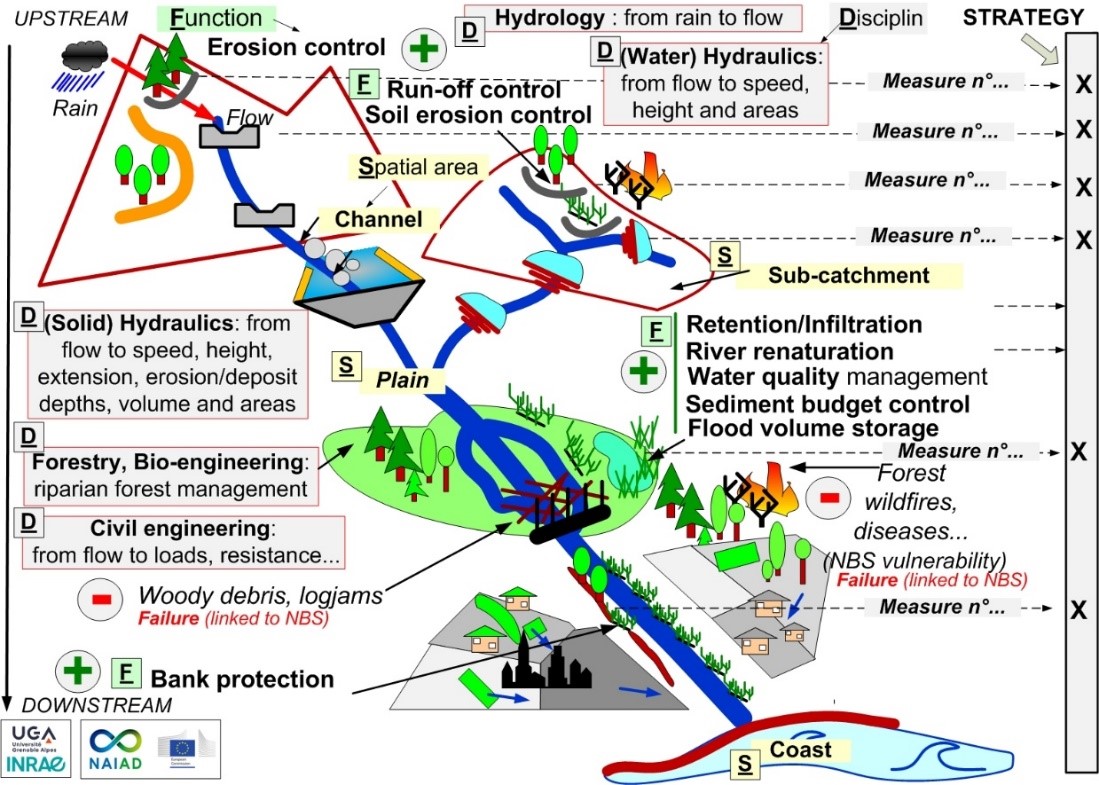
Figure 2. The concept of functional analysis: functions and capacities of NBS have first to be clearly identified and described and then secondly assessed (in the most objective, quantitative or qualitative ways) to assess their effectiveness (Tacnet et al., 2019. NAIAD D5.4 part. 4)
An example of application is proposed on figure 2. It describes the physical functions of different categories of NBS in the context of flood risk management. This chart describes the process to organize and structure the assessment of NBS’ effectiveness. First step is to analyse the spatial areas and scales where measures will be implemented. Each measure is described according to its functions. Indicators can then be chosen and assessed using inputs from different disciplinary thematic, technical approaches.
See also others e-guide factsheets:
Flood Excess Volume (FEV): an easy-to-use and understand method to determine the hydraulic requirements and compare them with NBS capacities
An integrated approach to choose, implement and assess Nature Based Solutions for risk and water management
New hybrid design methodology and framework of practical tools for decision-aiding and assessment of NBS’ efficacy
Applications to decision making in the insurance sector:
Identification and use of usable indicators is of higher interest for risk managers, decision-makers, public funding bodies and generally any actors involved in decision-making processes linked to NBS and risk management. This framework allow the actors of decision to be able to check the relevance of proposed indicators and also, if needed to design and add new ones.
Added value of this modelling approach/model/results:
The approach applies functional and systemic analysis to NBS thematic domain. This pragmatic framework is compliant with multidisciplinary approach and allow decision-makers and stakeholders to stay or become critical about existing indicators and innovative when new indicators are needed. It is an essential step in the new hybrid design framework (see other factsheet in this e-guide) to link thematic approaches and decision-aiding approaches.
What decision can be improved with this modelling approach:
The framework can be applied to assess the effectiveness of any risk management measure or solution including grey, green and hybrid strategies

Potential Categories of Users
Any stakeholders involved in the assessment of NBS effectiveness and contributing or involved in decision-making process including :
Regional and local authorities
River basin authorities
Land use planners
Public bodies and agencies
State, administrations
Experts
Citizens
Non-governmental organizations
Insurance companies
Additional Links
TACNET, Jean-Marc ; PITON, Guillaume ; PHILIPPE, Félix ; GOUHRAND, Antoine ; VASSAS, Carolyne, Décider dans le contexte de la GEMAPI : exemple de méthodologie d’une approche intégrée d’aide à la décision et application aux projets d’aménagements, Revue Science Eaux & Territoires, GEMAPI : vers une gestion plus intégrée de l’eau et des territoires, numéro 26, 2018, p. 48-53, 09/11/2018. http://www.set-revue.fr/decider-dans-le-contexte-de-la-gemapi-exemple-de-methodologie-dune-approche-integree-daide-la DOI : 10.14758/SET-REVUE.2018.26.09
TACNET, Jean-Marc, PITON, Guillaume, FAVIER, Philomène, PENGAL, Polona (2019): “DELIVERABLE 5.4 Integrative modelling framework and testing in the DEMOs. Part 4: From indicators definition to NBS choice and effectiveness assessment”. EU Horizon 2020 NAIAD Project, Grant Agreement N°730497 (to be published as part of a book)
EU NBS handbook (chapter 2) – (under review)